Skip to content
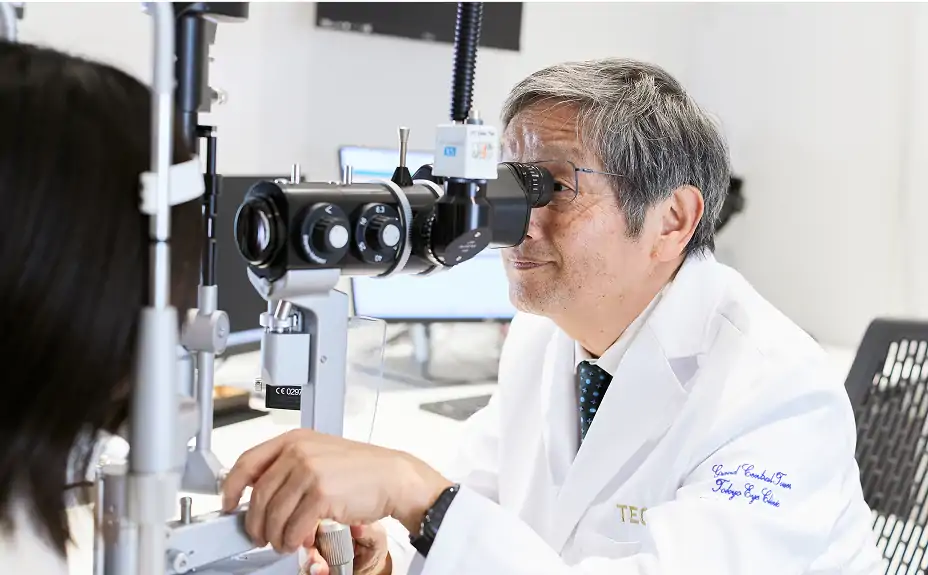
The surgeon examining a patient on the 16th floor of Shinagawa Grand Central Tower

ONLY TWO IN JAPAN ICL Senior Expert Instructors on staff

For ICL surgery in Tokyo & Shinagawa

Grand Central Tower Tokyo Eye Clinic

Care tailored to each person's way of seeing

From presbyopia and cataracts to myopia, ICL as a new option.

A free suitability screening brings ICL closer to you

The surgeon carrying out a suitability test with a slit lamp

We examine whether ICL surgery is suitable for you, free of charge. Please book from the links below before visiting.

POINT

Five strengths of Tokyo Eye Clinic

POINT01

Doctors and a medical team active in Japan and abroad

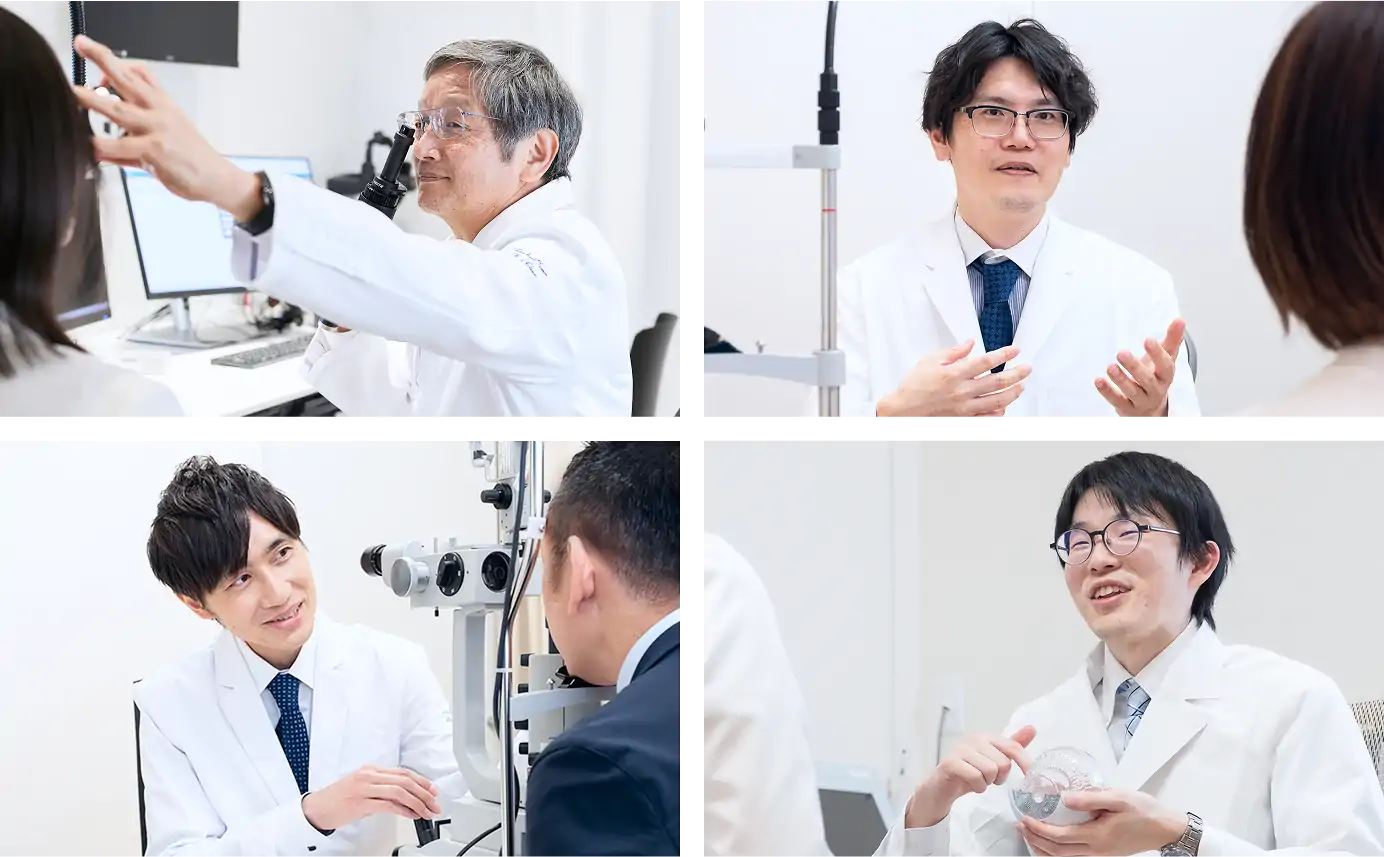
The doctors and the clinical team

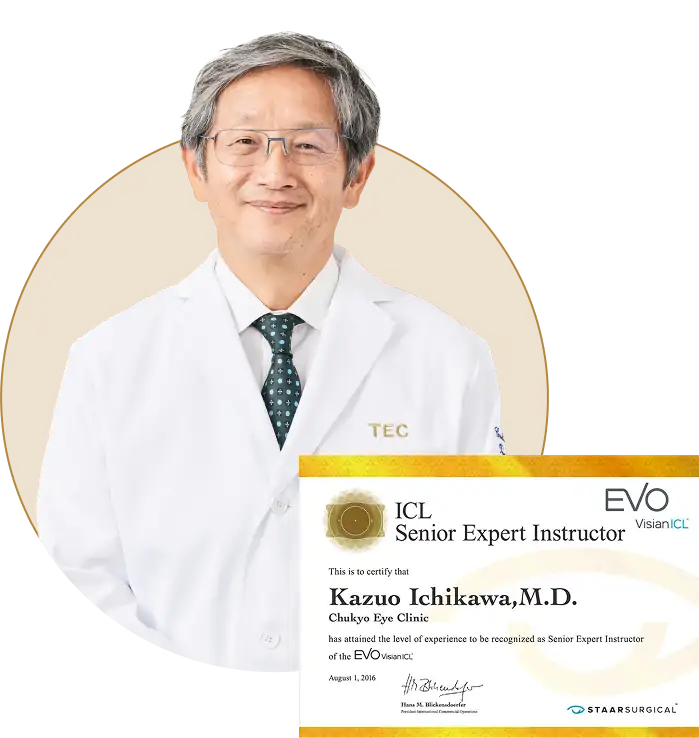
Chief surgeon Dr. Kazuo Ichikawa is certified by STAAR Surgical as an ICL Senior Expert Instructor — one of only two in Japan (as of May 2025) — and has been involved in ICL treatment since its clinical-trial stage.

Our team also includes physicians who are active internationally through overseas medical aid and academic society work.

Because our doctors are active in their own specialties as well as in ICL surgery, they examine the condition of your eyes carefully from multiple angles.

ICL surgery licence levels. Certified surgeon: licensed by STAAR Surgical to perform ICL surgery. Instructor: qualified to assess technique and supervise. Expert Instructor: 12 in Japan. Senior Expert Instructor: 2 in Japan.
What is a Senior Expert Instructor?

Among the Expert Instructors certified by STAAR Surgical, these are doctors who have contributed to ICL treatment over a long period and are qualified to give technical instruction in ICL surgery. There are only two in Japan.

What is an Expert Instructor?

They provide technical instruction in ICL surgery to ophthalmologists in Japan, attend surgeries, make final decisions on certification, and help define the certification system. There are only twelve in Japan.

POINT02

Precise pre-operative examination and careful counseling

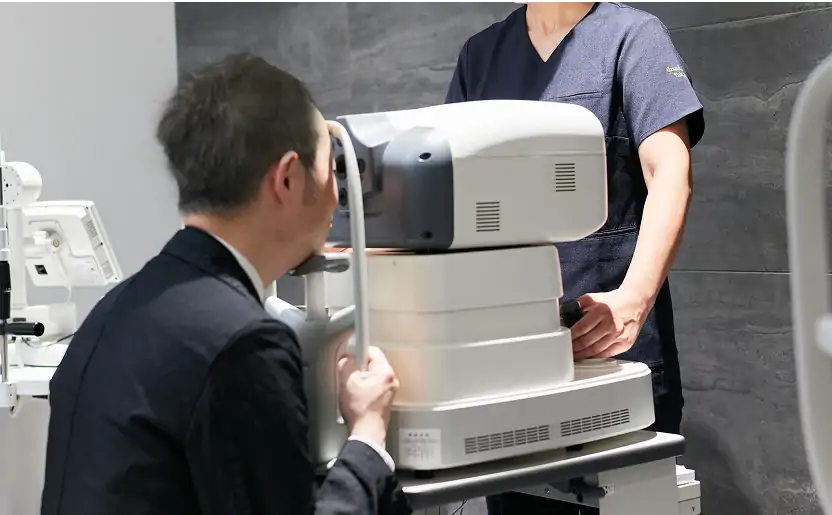
To achieve better post-operative results we perform the pre-operative examination twice, so that the optimal power for each patient is measured accurately and over-correction is prevented. We also perform visual field and fundus examinations so that early signs of glaucoma — common among people with myopia — are not missed.

An orthoptist who has worked in ICL research for many years, with many presentations and papers at major conferences in Japan and abroad, is on our staff. Drawing on that knowledge and experience, we counsel each patient carefully using detailed screening data, so that everyone can proceed with full understanding and peace of mind.

Pre-operative examination Counselling session

POINT03

Presbyopia can also be treated

In addition to conventional ICL we also treat presbyopia. We propose lenses suited to each patient's eyes and lifestyle, such as EDOF (extended depth of focus) ICL and IPCL (bifocal implantable contact lenses).

The main benefit of correcting presbyopia with an implantable contact lens is reduced dependence on glasses and improved uncorrected vision. The benefits you can expect differ by method.

Presbyopia treatment

Comparison by method

Four ways of addressing presbyopia, compared by advantage and disadvantage. Which one suits you depends on the condition of your eyes and how you use them day to day — we propose the best option at your examination.

TYPE 01

Multifocal

A lens designed to focus at several distances — far, near and intermediate. Suited to people who want to rely less on glasses.

Advantages

  • Improves vision across a wide range, from far to nearAfter surgery you can expect to see reasonably well both far and near
  • Corrects hyperopia and astigmatismSome lenses correct hyperopia and astigmatism, not only myopia

Disadvantages

  • Halo and glare occur relatively easily
  • Reduced contrast can make small text harder to read
  • As a relatively new technology, long-term data is not available
  • The quality of vision varies from person to person
TYPE 02

Extended depth of focus (EDOF)

A lens that extends focus from far to intermediate distance. Contrast loss is smaller than with multifocal lenses and sharpness is comparable to a monofocal lens, so we recommend it for people who want vision that feels natural.

Advantages

  • Better distance vision than multifocal lenses
  • Close to natural vision
  • The lenses used have a long track record

Disadvantages

  • Cannot correct hyperopia or astigmatism
  • Near vision is limited, so reading glasses may be needed for detailed work
TYPE 03

Monovision (monofocal)

Lenses of different powers are implanted in each eye, one mainly for distance and the other mainly for near. With both eyes open the brain uses them naturally, so you can see reasonably well both far and near.

Advantages

  • Vision is clearer than with multifocal lenses, and halo and glare are less likely
  • The lenses used have a long track record

Disadvantages

  • The brain may not adapt to the difference between the eyes, causing fatigue or discomfort* Checking compatibility with trial lenses before surgery is very important
  • Depth perception weakens, which may affect driving and sports
TYPE 04

Under-correction

Surgery in which the correction for myopia or astigmatism is set deliberately low. It suits people with mild myopia or astigmatism, and mainly uses monofocal lenses.

Advantages

  • Leaving slight myopia on purpose makes near objects easier to see
  • The lenses used have a long track record

Disadvantages

  • Distant objects look blurred, so glasses are needed when distance vision is required
  • Near vision may not improve enough while distance vision is also compromised

POINT04

Advanced medical equipment and an up-to-date surgical environment

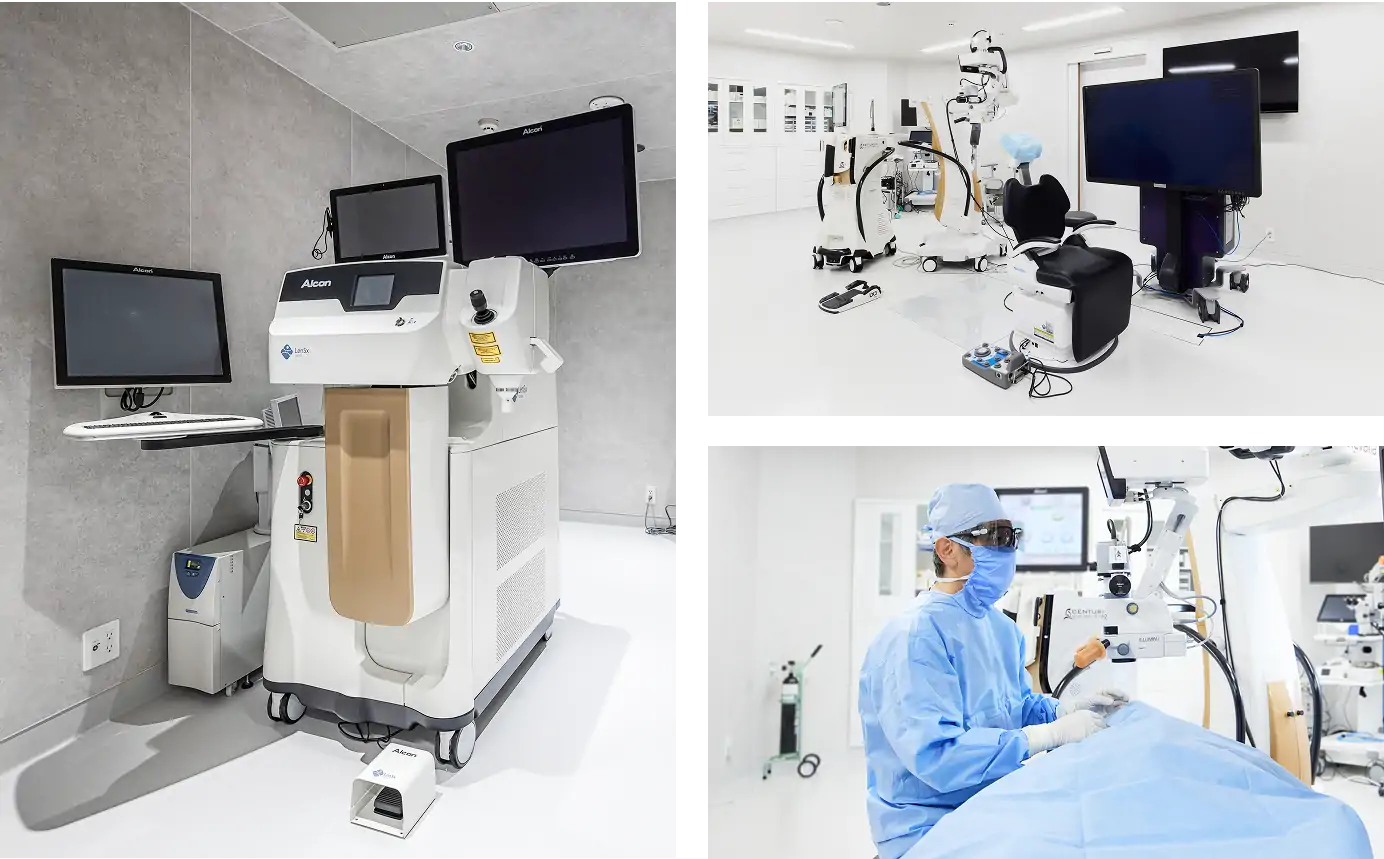
We maintain advanced medical equipment in order to deliver stable, high-quality surgery.

Images captured by a high-grade digital microscope are shown on a high-resolution 3D 4K monitor, and the surgeon operates while viewing that sharp, three-dimensional image through polarized glasses. This "heads-up surgery" produces more precise and stable results and raises the reliability of the procedure.

Heads-up surgery using a digital microscope and a 3D 4K monitor

POINT05

Post-operative aftercare

Right after surgery you rest at the clinic for about an hour. We ask you to wear protective glasses for a set period.

We also explain carefully what to be mindful of in daily life after surgery.

If lens exchange or removal becomes necessary from a medical standpoint, we handle it free of charge within three years after surgery.

Post-operative aftercare Protective eyewear

RESERVE

Reservations

Grand Central Tower Tokyo Eye Clinic is fully reservation-based. Please book from the links below before visiting.

By phone 0120-210-109

ABOUT ICL

What is ICL?

ICL surgery places a small lens inside the eye to correct myopia, hyperopia and astigmatism and restore uncorrected vision .

Unlike LASIK, which reshapes the cornea, ICL leaves the cornea intact and places the lens between the iris and the crystalline lens. For this reason it is also called an implantable contact lens or a phakic intraocular lens.

Video: the real costs of ICL surgery and insurance coverage, and what you need to know
The reality of ICL surgery costs and insurance: what you need to know. Tap to play.

Advantages of ICL surgery

  • High corrective power and stability

    It can treat high myopia and astigmatism that LASIK cannot, and regression of vision after surgery is said to be rare.

  • Good quality of vision

    Because the cornea is not shaved, contrast sensitivity and night vision are said to be better.

  • Lower risk of dry eye

    Since the corneal surface is not widely incised, post-operative dry eye is said to be less likely than with LASIK.

  • Reversible

    If necessary, or if another treatment is needed in the future, the implanted lens can be removed.

Disadvantages and risks of ICL surgery

  • Higher cost

    Surgery tends to cost more than LASIK.

  • Halo and glare

    Lights may appear to blur at night (halo and glare).

  • Surgical risk

    As it is intraocular surgery, there is a very rare risk of infection (endophthalmitis), raised eye pressure, or other complications.

  • Lens displacement

    Rarely the implanted lens can shift, which may require a second procedure.

* At our clinic the surgical fee includes consultations, examinations and medication for up to three months after surgery, and a three-year warranty period is provided.

SURGEONS

Our surgeons

Surgery is performed by doctors certified as ICL surgeons.

Only two in Japan Senior Expert Instructor

Kazuo IchikawaKazuo Ichikawa

Chief surgeon / Doctor of Medicine

  • Chief Surgeon
  • Laser cataract surgery / cataract surgeon
  • ICL surgeon
View career history

1978 Graduated from Aichi Medical University 1983 Completed the Graduate School of Medicine (Ophthalmology), Nagoya University 1983 Department of Ophthalmology, Shakai Hoken Chukyo Hospital (now JCHO Chukyo Hospital) 1986 Chief of the Department of Ophthalmology, Shakai Hoken Chukyo Hospital 2002 Visiting Professor, Dalian Medical University, China 2003 Part-time Lecturer, Kitasato University School of Medicine 2014 Director, Visual Research Institute, Chukyo Eye Clinic 2014 Ophthalmology Advisor, JCHO Chukyo Hospital 2017 Visiting Professor, The Fourth Affiliated Hospital of Harbin Medical University 2020 President, Japanese Society of Cataract and Refractive Surgery 2025 Chief Surgeon, Grand Central Tower Tokyo Eye Clinic

Kazuo Ichikawa, chief surgeon

Publications by Kazuo Ichikawa

  • 『放っておくと失明する怖い目の病気』 (in Japanese, published December 2022)
  • 『知られざる色覚異常の真実 改訂版』 (in Japanese, published December 2020)
  • 『「一生よく見える目」を手に入れる 白内障手術 改訂版』 (in Japanese, published March 2018)
  • 『正しく理解して選ぶ 視力矯正治療』 (in Japanese, published March 2014)
  • 『手術法とレンズで選ぶ 白内障治療』 (in Japanese, published April 2013)
Books by Kazuo Ichikawa
Dr Kei Ichikawa

Kei IchikawaKei Ichikawa

Surgeon

  • Laser cataract surgery
  • Day-surgery cataract surgeon
  • ICL surgeon
View career history

2008 Graduated from the School of Medicine, Aichi Medical University 2008 Shakai Hoken Chukyo Hospital (now JCHO Chukyo Hospital) 2010 Department of Ophthalmology, Shakai Hoken Chukyo Hospital (now JCHO Chukyo Hospital) 2013 Department of Ophthalmology, Gifu Red Cross Hospital 2019 Chief of the Department of Ophthalmology, Aoyama General Hospital

Dr Satoshi Gotoda

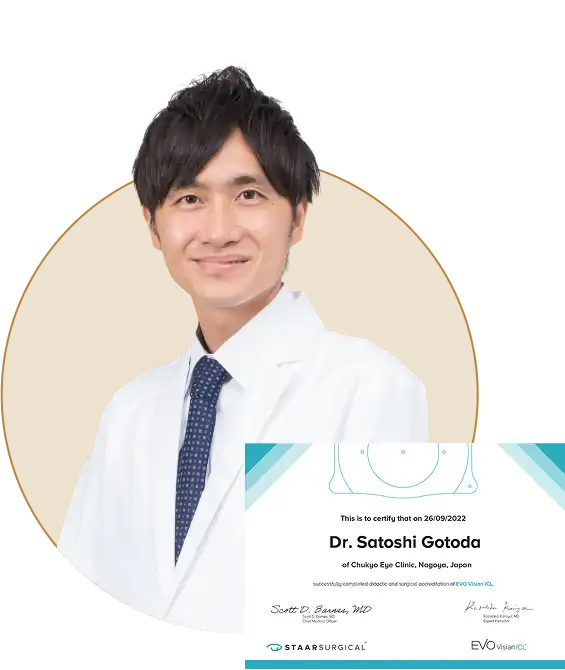
Satoshi GotodaSatoshi Gotoda

Surgeon

  • ICL surgeon
View career history

2014 Graduated from Showa University School of Medicine (now Showa Medical University) 2016 Department of Ophthalmology, Toranomon Hospital 2017 Department of Ophthalmology, Yokohama City University Medical Center 2018 Department of Ophthalmology, Toho University Omori Medical Center / Omori Red Cross Hospital 2021 Domestic research fellowship, Department of Ophthalmology, Kitasato University Hospital 2022 Assistant Professor, Department of Ophthalmology, Kitasato University School of Medicine 2023 Chukyo Eye Clinic 2025 Senior Physician / Head of Corneal Services, Chukyo Eye Clinic

Dr Sho Ichikawa

Sho IchikawaSho Ichikawa

Director

  • Laser cataract surgery
  • Day-surgery cataract surgeon
  • ICL surgeon
View career history

2013 Graduated from Aichi Medical University 2013 Shakai Hoken Chukyo Hospital (now JCHO Chukyo Hospital) 2015 Department of Ophthalmology, JCHO Chukyo Hospital 2017 Department of Ophthalmology, Gifu Red Cross Hospital 2023 Chukyo Eye Clinic 2025 Senior Physician / Head of Strabismus Services, Chukyo Eye Clinic 2025 Director, Grand Central Tower Tokyo Eye Clinic

FLOW

The process

From reservation to after surgery

  1. STEP 01

    Screening and surgical explanation

    First you undergo a suitability screening. Afterwards we explain the results, and for those suited to ICL we also explain the surgery.

    [Speed plan]If you have already completed the contact-lens rest period, you can proceed to the first pre-operative examination on the same day as the screening.

  2. STEP 02

    Pre-operative examination and lens order

    After the examination, the doctor and staff explain the flow of surgery and the points to note afterwards. Once you are satisfied, you pay the surgical fee and we order the lens. We provide the eye drops needed before surgery — please use them as instructed. Once the lens arrives we finalise the surgery date.

    Contact-lens rest period before the pre-operative examination
    TypeRest period
    Soft contact lenses without astigmatism correction1 week
    Soft contact lenses with astigmatism correction2 weeks
    Hard contact lenses3 weeks
  3. STEP 03

    The day of surgery

    ICL is day surgery. Please come without foundation or eye make-up, and wear glasses rather than contact lenses. Your vision is hazy right after surgery, so you cannot drive that day. Vision becomes clear the next day, but returning to work is possible from the second day after surgery at the earliest.

  4. STEP 04

    Post-operative examinations

    Regular visits are needed after surgery to monitor your progress — frequently at first, then at gradually longer intervals.

The ICL procedure

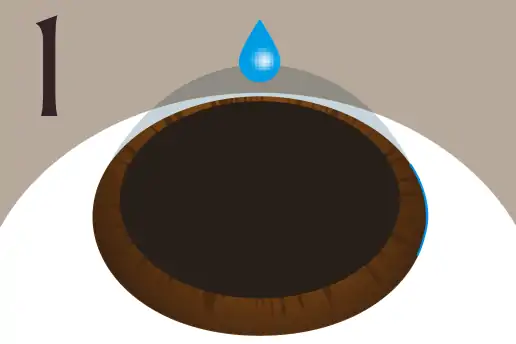
  1. Eye rinsing, anaesthetic drops and the corneal incision

    01Cleansing, drops and corneal incision

    Drops dilate the pupil and provide anaesthesia. A roughly 3 mm incision is made at the edge of the cornea.

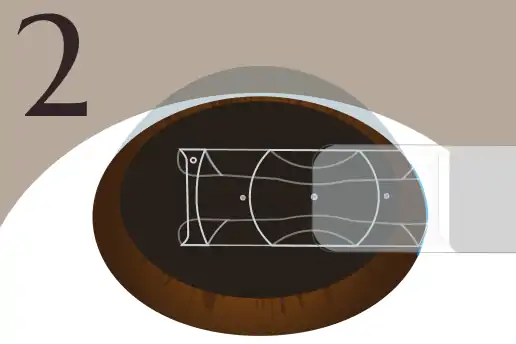
  2. Inserting the ICL

    02Inserting the ICL

    The lens is inserted through the incision.

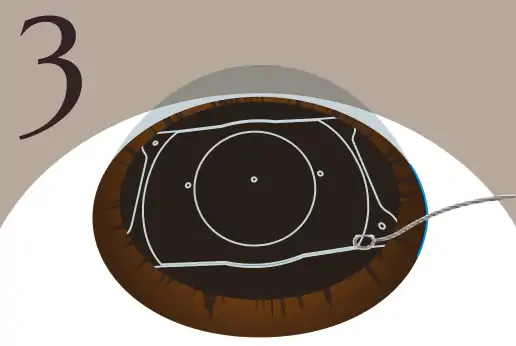
  3. Adjusting the lens position

    03Adjusting the lens position

    The lens position is adjusted and fixed between the iris and the crystalline lens.

  4. Constricting the pupil to finish

    04Constricting the pupil to finish

    The dilated pupil is constricted with medication to finish. The corneal incision heals naturally, so no suturing is needed.

COST

Examination and surgery fees

Examination fees

Suitability screeningFree
Pre-operative examination and consultation¥33,000

Surgery fees

ICLOne eyeBoth eyes
Myopia, without astigmatism¥330,000¥660,000
Myopia, with astigmatism¥385,000¥770,000
Myopia, without astigmatismOperated by a Senior Expert Instructor¥385,000¥770,000
Myopia, with astigmatismOperated by a Senior Expert Instructor¥440,000¥880,000
Hyperopia, without astigmatism¥385,000¥770,000
Hyperopia, with astigmatism¥440,000¥880,000
ICL / IPCL (for presbyopia)One eyeBoth eyes
Without astigmatism¥440,000¥880,000
With astigmatism¥495,000¥990,000

* The surgical fee covers the surgery itself plus consultations, examinations and medication from just before surgery until three months afterwards. * This is self-pay treatment and is not covered by health insurance. * Presbyopia-compatible ICL is performed by a Senior Expert Instructor.

Other

Consultation from three months after surgery (per visit)¥11,000

Covered by the warranty

Lens exchangeWithin 3 years / free, including size and power changes
Lens removalWithin 3 years / free

* The warranty applies when a doctor judges it to be medically necessary.

FAQ

Frequently asked questions

I have presbyopia. Can I still have ICL?

There are options aimed at making both distance and near vision easier, including presbyopia-compatible implantable lenses (IPCL) and EDOF lenses that extend the depth of focus. Which lens suits you depends on the condition of your eyes and on which distances matter most in your work and hobbies. We will ask about your lifestyle during counselling and propose accordingly.

How long is it from the examination to the surgery?

Because the lens is ordered to match each individual eye, it usually takes several weeks from examination to surgery. The exact period varies with the power and type of lens. If you have a fixed schedule in mind, let us know early and we will do our best to accommodate it.

What should I bring on my first visit?

Because this is self-pay care, a health insurance card is not required. Please bring any spectacles you use, something showing the type and power of your contact lenses, and any examination data or referral letter from another clinic if you have one. Dilating eye drops are used at the screening examination, so sunglasses make the journey home more comfortable.

How much does treatment cost?

Fees depend on whether you are correcting myopia or hyperopia, whether astigmatism is included, which surgeon operates, and which lens you choose. The amount for each procedure is listed in our fee table. The first screening and counselling are free, but the pre-operative examination and consultation after you decide to proceed are chargeable. We will explain a quotation together with your treatment plan at counselling.

Is the free examination really free?

Yes. The first examination and counseling to determine suitability for ICL or cataract treatment are free. Please make a reservation in advance as the clinic is fully reservation-based.

ACCESS

Access

Google rating 4.9 (41 reviews)

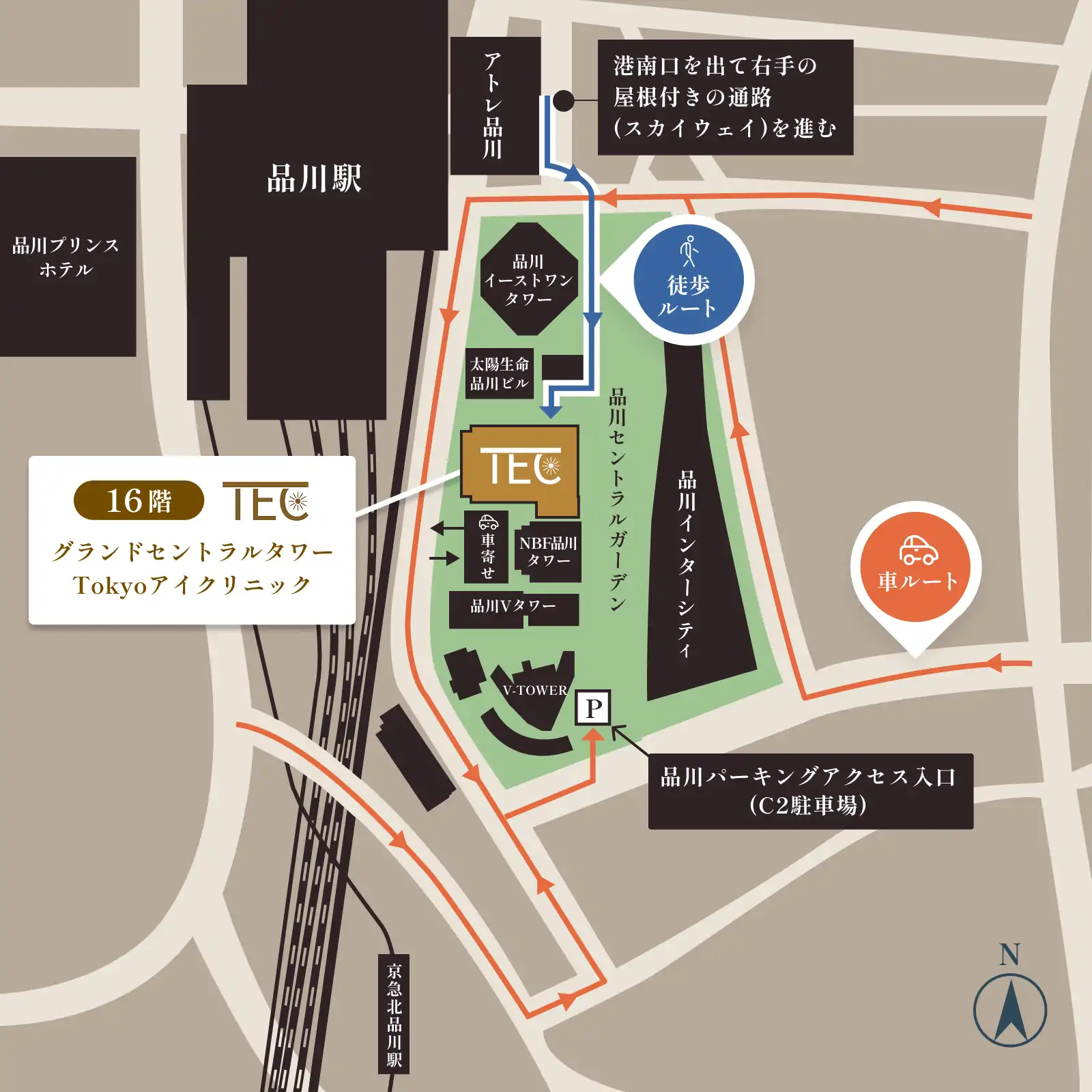
From the Konan Exit of Shinagawa Station, take the covered Skyway walkway on your right; the clinic is on the 16th floor of Shinagawa Grand Central Tower in Shinagawa Central Garden
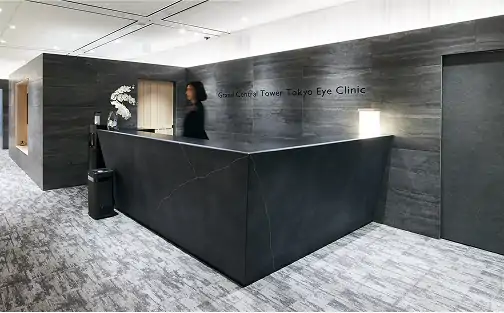
Shinagawa Grand Central Tower The clinic reception

〒108-0075 東京都港区港南2-16-4 品川グランドセントラルタワー16階 TEL:0120-210-109

Google Map

By train

JR Yamanote / Keihin-Tohoku / Yokosuka / Tokaido Line — Shinagawa Station 3 min. walk from the Konan Exit
By car

We do not have a contracted car park. Please use one of the nearby pay car parks. Thank you for your understanding.

Consultation hours

Wed, Thu, Fri, Sat 10:00–18:00 Sun 10:00–13:00 Closed: Mon & Tue

BEFORE YOU DECIDE

If you are considering ICL surgery

Please consider carefully whether ICL surgery is the right vision-correction method for you, taking into account the condition of your eyes, your lifestyle and the cost.

It is important to understand the risks and possible complications before undergoing surgery. When considering it, discuss things thoroughly with an ophthalmologist and describe your eye condition, your lifestyle and the vision you hope for in detail.

Experience how you will see through a pre-operative trial, and proceed with surgery only once you are satisfied.

Explaining the treatment with a brochure

RESERVE

Reservations

Grand Central Tower Tokyo Eye Clinic is fully reservation-based. Please book from the links below before visiting.

  • Screening is free
  • Book online 24 hours a day
  • 3 min. from JR Shinagawa Sta.
By phone0120-210-109

Consultation hours: Wed–Sat 10:00–18:00 / Sun 10:00–13:00 (closed Mon & Tue)

Book online Book via LINE